Timeline
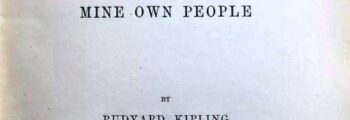
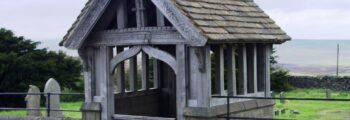
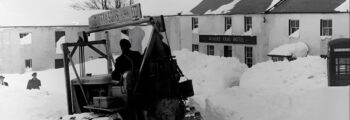
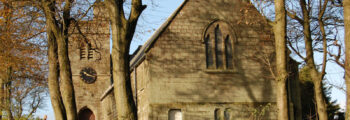
2 INGOTS OF LEAD FROM GREENHOW – In February 1734, Mr Henry Smart Stevens sent a drawing of two ingots of lead to the Royal Society. They had been found, buried two feet deep, on the side of a track at Heyshaw Bank near Dacre in 1731. A countryman’s horse slipped when its foot fell… ANOTHER INGOT OF LEAD, now lost, is said to have been found near Nussey Knott, circa 1860. It weighed about 88 lbs, and was inscribed with Trajan’s name, dating it to between 98 and 117 A.D. Despite these clues that the Romans mined for lead on Greenhow, no evidence of their mining or smelting… Roger de Mowbray granted Fountains Abbey “All copper, iron, lead and every kind of metal and stone in his forest of Niderdala in whatsoever place found, below ground or above… in shafts, mines, and minerals” This grant included the township of Bewerley which includes the area which would become the village of Greenhow Hill…. Agreement in settlement of a dispute between Fountains and Byland respecting the mines of Nidredal…. The Abbot and Convent of Fountains grant to Byland two pits in Le Feldberg successively to be possessed forever, within the bounds of Fountains; and likewise for a term of seven years from the Day of the Purification B.M…. An agreement was made between Byland & Fountains Abbeys that a groove on Kaldestaines (Coldstones), previously worked in common, should continue to be worked in the same way until exhausted. John de Eshton claimed that he was granted in fee simple 2 acres of land which he was holding by assignment of the King’s Steward in Barden wood, in the Forest of Skipton, for the support of his mill and lead mine in Appletreewick. Reference: Cal. P.R. 1272-81, 405, 18 November 1280. The inhabitants of Bewerley are described as: “living in a certain Beastlie manner to the peril of there soles … which do till and sowe lands and bread cattell, and by there worke do get manie things and manifold of the ground, that is to saye, of iron digging, lead digging and stones digging…” Dispute between the Officers of the Honour of Kirkby Malzeard and Fountains about the ownership of a newly opened lead mine in Nidderdale. The Lord, John de Mowbray, confirmed the Abbey’s title. Reference = Fount. Chart. p214. The King ordered lead for Windsor: “Two wagons, each with 10 oxen, carrying 24 fothers of the said lead from Coldstones in Nidderdale in the county of York, by high and rocky mountains and muddy roads to Boroughbridge.” Thomas de Musgrave, sheriff of York, gave an account of lead ordered by the King for work… Fountains Abbey opened new mines, which the Officers of the Honour of Kirkby Malzeard claimed (see 1359). This time, Thomas de Mowbray confirmed the Abbey’s title. Reference: Speight, Nidderdale (1894) p463. Founts. Chart. p214. Will’mo Coksen de garsyngton in plena solucione pro plumbi liberator, no Th haryngton, 33s 4d. petit allocacionem de 8s pro factura et mundacione de smeltemyln exconvencione facta per Th Jenynson. [William Cokson of Grassington in full payment for lead delivered to Th Harington. He asks for an allowance of 8s for the making and cleaning… An account with William Hudson, smith of Adfield, for making a “sufflatorium pro le bales” (an iron tuyere? Tuyere – a nozzle through which air is forced into a smelter, furnace, or forge). Reference: Mems. Fount. Accounts of Adam Swynton. 3, 205-6. Bolton Priory – the tenants of Knaresborough Forest complained that “of a long time … occupied a parcel of ground … within the Forest — at a place called *Monghawgill” and had opened a lead mine there. *Mongo Gill Reference = K.C.R.; D.L. 42/19 ff.31, 39v, 72v. 14 Henry VII, 6th November – all manner of men as well denycen and foreign that from this day forward shall bring any manner lead from Boroughbridge or any other place to this city by land or water to be wound and weighed at the common crane of this city shall from henceforth pay… 15 Henry VII, 30th September – It was enacted that from this day forth no franchised man of this city [York] in his own person nor non-other for him or to his use or by hove by no manner lead coming from. Swaledale, Wensleydale or Craven and weigh it at Boroughbridge nor at any… Robert Esh, working under the Prior of Bolton, struck ore in Mungo Gill and several miners were employed there for some years. Reference: D.L. I, Vol.30, pl2. D.L. 30/490/9. The York Guild of Merchant Adventurers chastised the then Abbot of Fountains, Marmaduke Huby: “…we understand that you occupy buying and selling lead and other merchandise as a free merchant, contrary to God’s laws and man’s, you being a spiritual man and of religion, and so your occupying is great damage and hurt to… Henry Young, of Appletreewick, Leadman, was in trouble with the citizens of York over the sale, contrary to their regulations, of 6 fothers and 101 quarters of lead. He had sold it to a London draper at some point between Ripon and Fountains. The lead was seized by the Chamberlain of York in a dispute about tolls…. Forest tenants accused Fountains and Bolton, among other things, of sinking several shafts within the forest boundary on Greenhow. The Crown ordered an investigation, and the Abbot was instructed not to mine in the area concerned, and the jury of the Honour of Knaresborough Court was told to stop levying fines on the Abbot… 12th September. Marmaduke Bayne, of Bridgehouse in Nidderdale, gentleman, John Parkinson and William Lupton of Bishopside to carry away all the lead delivered to them at Greenhow Moor to the bale hills in the Bishopside, and burn it at their own charge, not using Abbey wood unless paid for; to make one fother of lead from each 8 loads… The King leased to Thomas Pulleyn of Blubberhouse and William Deconson of Brame, near Fewston, – the lead mines “in a waste ground called Middle Tongue, Mungo Gill, Greenhow and Greenhow Sike, within the Forest of Knaresborough. The lease was for 20 years at one-ninth. Work began at Mongo Gill and, in seven weeks they had produced 30… 500 miners are recorded as having assembled near Craven Keld accusing the Bolton Priory men of sinking shafts within the Forest of Knaresborough boundaries. Bolton Priory also claimed rights to work the mines in the western area around Mungo Gill. It is not known how many of these people actually lived on the hill;… The canons of Bolton were in a dispute in Chancery about the sale of 62 fothers of lead “which were fined and made out of the proper ore of your suppliant” and had been sold to John Chapman, of York, for £246″, which is after the value of £4/fother. Reference: Early Chancery Proceedings, bundle 728, No.26, Monastic… Will of Henry Young, of Appletreewick, who left to his children: “all his lead mines and groves in Appletreewick Moors. Also half of the sixth part of a grove called Boynebridge Grove. Also the sixth part of a grove next to my lady Cumberland’s Grove. Also the third part of half a more meer next adjoining… Ships lading with lead at Hull, from merchants of York and Hull. For Flanders: Marrie Gallande of Newcastle. The John of Newcastle. The Peter of Hull. Marie James of Hull. John Baptyst of Hull. The John of Hull Together carrying 307 fother. For Bordeaux: The George of Newcastle. The Swallow of Newcastle. The Mawdelen of Hull Together carrying 65… 29 Henry VIII. 30th November – Byland Abbey leased all it mines of coal and lead, in Nidderdale, to John Uvedale for forty years. John died and the lease passed to Averye Uvedale, who was granted all the timber he required during the remaining part of the 40 years. Paying yearly 3 load for every 20 loads gained…. Sir Stephen Proctor bought the Manor of Bewerley, including the mineral rights. On the death of Pulleyn, Deconson surrendered his lease (see 1529) on the Greenhow-Mongo Gill area. It was re-leased in this year to Ingram Clifford, for a term of 30 years. This man had also leased ‘some of Bolton Priory’s Appletreewick Mines. Sir Richard Gresham bought Fountains Abbey and its Nidderdale Estates. Reference: Duchy of Lancaster 39/4/16…. 34 Henry VIII – Carriage and weighing of lead. Item paid to Mr. Gylmyne, the Crane man at York, for striking 48 pieces of lead out of the scales in the crane house there, which was delivered to Hull for every twenty pieces 8d the 14th of December, in Henry VIII’s 34th year, total = 19d; And… Sir Richard Gresham’s steward accounted for the shipment of about 100 pigs of lead to Hull via Boroughbridge and York. Including payment for mining and washing ore at Greenhow Moor and the smelting of 22 pigs at a bole hill. One fother of lead “of Bolton Moor” was bought from Thomas Proctor, who was about this time the… Note of a payment to Robert Elles for the carriage of 22 pieces from his bale hill to Boroughbridge at 5s/fother = 55s. Reference: Accounts of Receiver for Sir Richard Gresham for year ending Mich. Mems. Fount. 1, 402f. Sir John Yorke purchases the Manor of Appletreewick. Thomas Proctor bought the manor of Appletreewick in 1539, but after two weeks, he sold it to Sir Arthur D’Arcy for £1000, making a 50 per cent profit. D’Arcy then sold the Manor of Appletreewick to Sir John Yorke for £2000 in 1549. Uvedale complained that 36 loads of his ore had been taken by John Yorke, who had purchased the manor and mines. Reference: Select cases in the Court of Requests. Selden Society, 12 (1898). 201-204. Between January 21st and December 8th, a total of 204 others shipped from York. Reference: Merchant Venturers York pp.135f. Stephen Proctor built the first recorded smelt mill at Greenhow, probably on Brandstone Beck. An agreement between Stephen Proctor and John Armitage sought to protect the Greenhow miners’ rights: “notwithstanding the common pasture to the tenants also to be granted …there may be cottages erected for the miners and mineral workmen upon the said waste … and also for the keeping of draught oxen and horses for the… When the Clay Cross Co were opencasting Nebcastle Rake vein on Burhill for Fluorspar in the 1960s, a halfpenny was found on the picking belt dated 1675. At some time before 1678, Stephen Proctor sold the lead mines and commons to Richard Taylor, of Walling Wells near Retford. Taylor’s sole heir was his daughter, Bridget, who married Thomas White of Tuxford in 1698. When Taylor died, therefore, the manor of Bewerley passed to the White family. In 1891, Rudyard Kipling published his book, “Life’s Handicap”, which contained a chapter “, On Greenhow Hill”. Rudyard’s grandfather was Greenhow’s minister at the Methodist Chapel. “Moors an’ moors an’ moors, wi’ never a tree for shelter, an’ gray houses wi’ flagstone rooves, and pewits cryin’, an’ a windhover goin’ to and fro just… The new burial ground for St Mary’s Church, Greenhow, was consecrated by the Bishop of Ripon on Thursday, August 15th. The burial ground, situated at Coldstones, a third of a mile east of the church, was the gift of the Hon H.E. Butler of Nidd Hall. The Lytch Gate was made by the Mouseman,… Harald Bruff bought Kell House, near Craven Keld, as a gift to his wife in 1914. He had been coming to Greenhow since about 1907. Harald & Charlotte Bruff lived at Kell until Harald’s death in 1946. Harald formed the Greenhaugh Mining Co in 1914 to work Lead and Fluorspar from the mines on… A lot of snow this year, worse winter for 40 years. A shareholders report for the Greenhaugh Mining Co on 30th January 1917 told of deep snow over Greenhow, up to 12 feet deep in places: The position of the Company is at the present moment delicate, apart from the above mentioned difficulties, as… Bewerley Mines Ltd buys the Greenhow mineral rights for £1500 from William Hutchinson. In 1876, T.F.A. Burnaby’s son, Thomas Frederick, was the largest shareholder in the Ransgill Mining Company and in the following year he was a partner in the group promoting the Cockhill-Sunside Mine. When T.F.A. Burnaby died, in April 1893, the mines… Harald Bruff died on 29th January. His wife Charlotte sold Kell House and moved back to live with her daughter at Körunda Mansion, Ösmo, Stockholm, Sweden. The Miners Arms at Greenhow finally closed in 2008 after being open for hundreds of years. A planning application had been refused the previous year, but somehow the change from a pub to houses managed to take place. Photo taken in 1947. In April, an announcement was made that St Mary’s Church, reputedly the highest parish church in England, built in 1847, is to close: “It is with a heavy heart that we share news of plans to begin the formal process of closing St Mary’s Church, Greenhow. This decision has not been taken lightly and… Session 1814 – 15. 55 George III. An Act for Inclosing Lands in the Township of Appletreewick in the Parish of Burnsall, in the West Riding of the County of YORK. Royal Assent 12 May 1815. EXTRACT – SAVING MANORIAL RIGHTS. And that the said John Yorke, and all the future Lords, Ladies, and… EXTRACT FROM THE AWARD OF THE VALUER OF THE INCLOSURE OF BEWERLEY MOOR AND HARDCASTLE MOOR SITUATE IN THE TOWNSHIP OF BEWERLEY, IN THE COUNTY OF YORK. JAMES POWELL of Harrogate, Land Surveyor, was duly appointed the VALUER in the matter of the said Inclosure and made his award in writing bearing date the…
81

98
1151
1225
1226
1280
1351
1359
1365
1390
1446
1455
1480
1498
1499
1501
1502
1519
1527
1527
1529
1530
1533
1535
1536
1537
1539
1540
1542
1542
1543
1549
1554
1562
1606
1613
1675
1678
1891
1895
1914

1917

1926
1946
2008
2025
1815
1858